YuanRong Prisoners and Loot
Capture rate, execute, recruit, release, and how allies split the take.
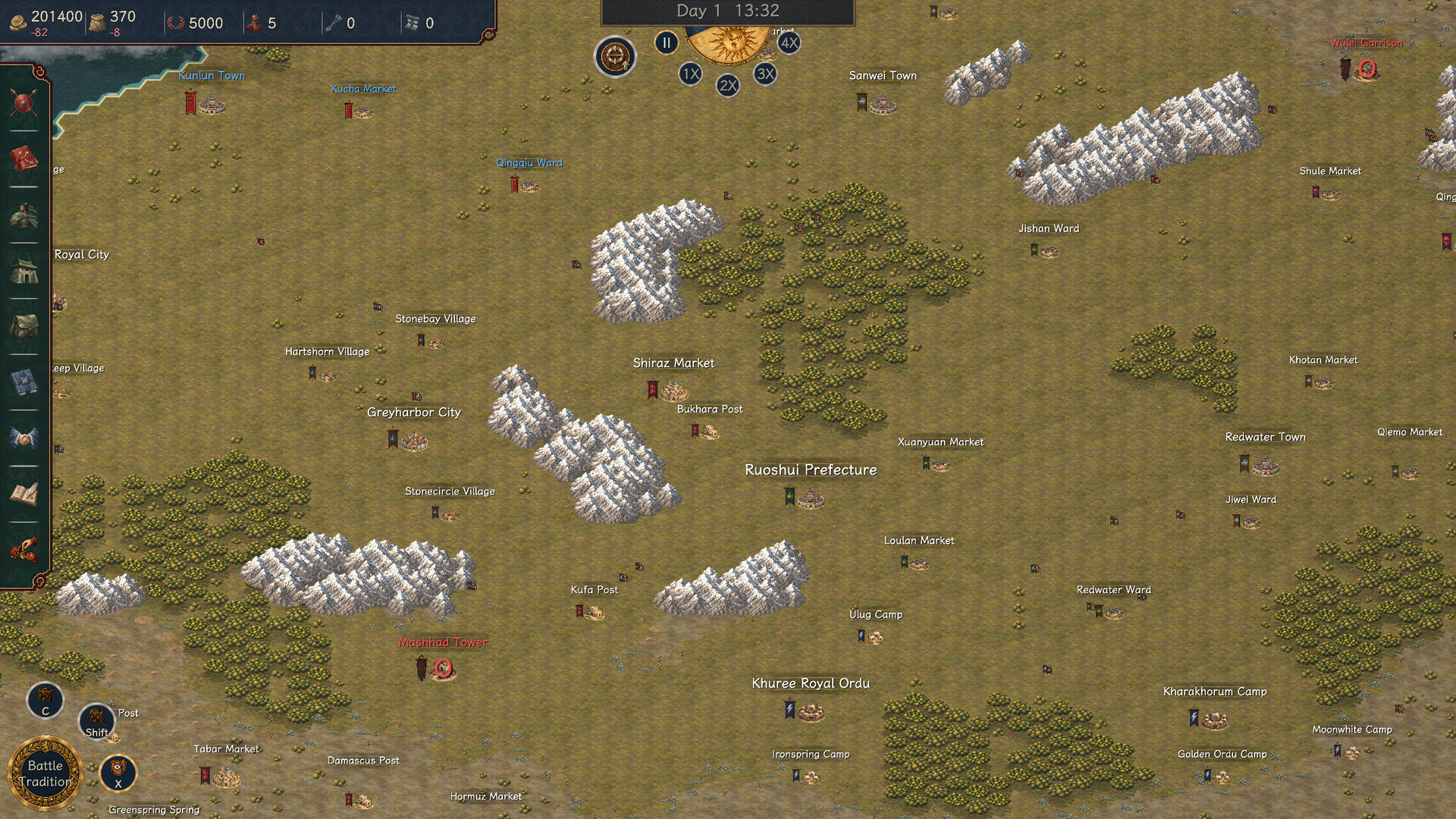
A win in YuanRong does not end when the last enemy formation breaks. The post-battle report is where prisoners and ordinary loot are decided, and the Early Access rules are specific enough that guessing is expensive. Prisoners arrived with the 24 November 2026 Early Access post. The allied loot split is older, from 1 November 2026, and it still applies. Manual fights and auto-resolve use the same loot rules, and they use the same prisoner rules. Choosing auto-resolve to dodge a harsh capture rate does not work.
Read Combat Basics before you treat the report as a shop. Organization, facing, and who actually died change both the fight and what you are allowed to claim afterward. Contract stakes sit on Mercenary Contracts. Culture decides which recruit pool a prisoner joins. Compare origins on Cultures Overview. Enemy commanders do not all treat captives the same way. That part is personality, explained on Personalities.
When the report appears
After you win a manual battle or an auto-resolved battle, the report lets you handle captured prisoners. A loss does not open this menu. Routing survivors are not the same thing as soldiers you captured. The capture step uses its own rate. Do not assume every broken unit walks into your cage.
If allies stood on your side of the field, pause before you celebrate a full haul. Their pre-battle strength share cuts ordinary loot and captured gold, and your loot share also scales how many prisoners the 25 percent base becomes. A glorious allied pile-on can be a thin personal report. That is the math working, not a missing reward.
The 25 percent capture rate
Base capture is 25 percent, scaled by your loot share, and rounded down. Start from a quarter of the eligible prisoners, then multiply by the share of the loot that is actually yours. Drop the fraction. Rounding down means a small loot share can wipe the last prisoner off the report even when the raw product looked close to one.
A solo win keeps the whole loot share, so the quarter stands, then rounds down. If allies hold about half the pre-battle strength, your loot share is about half, and the rounded-down prisoner count is smaller than that solo win over the same enemy. You are not stacking a second hidden tax. Loot share is the scale the note already names. Bring allies when you need their spears. Do not bring them when the whole point of the fight was a fat prisoner roll.
The note does not publish a separate capture rate for auto-resolve. Manual and auto-resolve share the rule. If the tactical AI fights the battle for you, you still face this report.
Execute, the default
Execute is the default choice. It grants bonus experience equal to 35 percent of each prisoner’s base combat experience. It does not pay gold, and it does not add the renown you would get from release. Use it when the company needs tier progress more than bodies, or when the prisoner would join a culture pool you cannot equip this month.
Thirty-five percent is of that prisoner’s base combat experience, not of the experience you earned from the battle itself. A high-tier captive is worth more experience than a militia captive because the base is higher. Executing a stack of cheap prisoners for a dream of instant elites will disappoint you. Executing the few skilled captives after a hard fight is the case the default is built for.
You can still mix choices inside the limits of the report. The default is execute, which means leaving the screen untouched is not the same as releasing people for renown. Look at the buttons before you confirm.
Recruit into your culture
Recruit costs gold only. The published prices are 15 gold for tier 1, 45 gold for tier 2, and 120 gold for tier 3. The Early Access note does not print a gold price for tier 4 or tier 5 captives. If a higher-tier name appears on your report, read the figure the game shows. Do not assume a neat continuation of 15, 45, and 120.
Recruits join at 50 percent hit points and 30 percent organization. They are not fresh barracks troops. Marching them straight into another pitched battle wastes the gold. Give them time, medicine preference, and a reserve slot. Overflow goes straight to reserves, so a formation that is already full does not block the purchase. The new soldiers join your culture’s recruits, not a foreign roster you happened to defeat. An Arabia company that recruits Bohemian captives is buying Arabia-legal bodies, under the culture you are playing. Check Cultures Overview if you are unsure which pools your formations accept.
Gold only means the button does not spend renown. It also means a broke company cannot recruit its way out of a victory. If the treasury cannot cover 120 gold, execute or release is the honest choice. Wages start once they are yours. A tier 3 bargain that you cannot feed is not a bargain.
Release and the renown cap
Release grants renown, up to 12 base renown per battle. The cap is per battle, not per prisoner. Releasing twenty captives does not print twenty times 12. The ceiling on that report is 12 base renown. Spend release on the battle where renown is the bottleneck for contracts or staff, not as a reflex on every skirmish.
Released soldiers return injured. That line in the note sits next to enemy commanders who handle prisoners by personality. Read it as a warning in both directions. People you let go are not walking back to their lord at full strength, and people an enemy commander lets go come home hurt. Do not plan a reinforcement wave of healthy veterans from a merciful opponent.
Enemy commanders and personality
Some enemy commanders handle prisoners according to personality. Yours is not the only will on the map. A calculating, suspicious, or harsh commander can change what happens to soldiers they hold. The full trait list, including how Cunning, Suspicious, and Sinister sit among the sixteen, is on Personalities. This page will not invent a private execute rate for each temperament. Open the commander and the encyclopedia when a named lord is the one taking captives.
Your own post-battle buttons remain yours after a win. Personality does not delete Execute, Recruit, or Release from a victory report. It explains why an enemy’s prisoners, including soldiers of yours who come back, may not match a generic mercy story. Injured returns are the published outcome for soldiers set free along that path.
Allied loot by pre-battle strength
When allies join a battle, ordinary loot and directly captured gold are divided by each side’s share of pre-battle strength. The split uses strength before the first hex, not kills, not damage dealt, and not who struck the last blow. A small allied detachment costs you a small slice. A lord who arrives with a host as large as yours can take about half the ordinary loot and captured gold even if your company did the risky positioning.
Manual battles and auto-resolve use the same split. You cannot auto-resolve your way into a solo purse while an ally’s army is present. Quest rewards, story rewards, and contract pay follow their own rules and are not this strength split. Do not confuse a contract purse on Mercenary Contracts with the battlefield pile.
Tie the two systems together when you decide whether to accept help. Loot share scales the 25 percent capture figure, and the same share cuts gold. Allies are a combat tool. They are a tax on the report. If Combat Basics says you can win the field alone without throwing away organization, the prisoner math often prefers that you do.
A short decision order
Count allies before the deployment. If their pre-battle strength is large, expect a thinner gold pile and fewer prisoners after rounding down. Win the fight cleanly enough that you still have a company to receive recruits. On the report, execute when 35 percent of a captive’s base combat experience is the scarce resource. Recruit at 15, 45, or 120 gold only when you can absorb 50 percent hit points and 30 percent organization, with overflow sitting in reserves until you form them. Release when you are under the battles that actually need renown, and remember the cap is 12 base renown for that battle. Then leave the screen. The next march does not pause while you reread the same three buttons.
Frequently Asked Questions
Quick answers about YuanRong Early Access, cultures, and combat.
What is the YuanRong prisoner capture rate?
Base capture is 25 percent, scaled by your loot share and rounded down. Allies shrink that share because ordinary loot follows pre-battle strength.
How much experience does executing a prisoner give?
Execute is the default. Bonus experience is 35 percent of that prisoner's base combat experience, not 35 percent of the whole battle's experience.
What does it cost to recruit tier 1, 2, and 3 prisoners?
Gold only: 15, 45, and 120. They join your culture's recruits at 50 percent hit points and 30 percent organization. Overflow goes to reserves. Higher tiers are not given a price in the note.
How much renown does releasing prisoners grant?
Up to 12 base renown per battle, not per head. Released soldiers return injured. Enemy commanders may also handle captives by personality. See Personalities.
Do auto-resolve and manual battles use different loot rules?
No. Manual battles and auto-resolve share the allied loot split and the prisoner rules. Auto-resolve does not protect your purse. See Combat Basics.